
Coconut oil can be an additional part of oral hygiene, but it is not a medicine for gingivitis or periodontal disease. Small oil-pulling studies suggest possible effects on plaque and selected measures of gum condition, but the evidence is limited. Thorough brushing, cleaning between the teeth and professional treatment remain the foundation.
Why is coconut oil associated with gum health?
Coconut oil contains fatty acids, including lauric acid, and is easy to move around the mouth. During oil pulling it mixes with saliva and moves around the teeth and gumline. Supporters describe a feeling of smoothness, freshness and fewer deposits.
This does not mean oil reaches periodontal pockets in a way that treats advanced disease. Bleeding, swelling and loose teeth need assessment to identify the cause.
What does research say?
Available studies tend to be small and short-term, using different oils and rinsing times. Some report possible reductions in plaque or certain bacteria compared with the start of the study. Scientific reviews nevertheless emphasise that this does not establish oil pulling as equivalent to standard methods of preventing and treating gum disease.
The fairest conclusion is that it can be an optional addition for someone who enjoys it and uses it safely, but it should not replace established care.
How does gingivitis differ from periodontitis?
Gingivitis is most often associated with plaque accumulation. Signs include redness, swelling and bleeding. It can be reversible when hygiene improves.
Periodontitis affects the deeper tissues supporting a tooth. It can lead to bone loss, receding gums, bad breath and loose teeth. It requires professional treatment. Oil alone does not remove tartar below the gumline or infected tissue.
Which symptoms need a dental appointment?
- Bleeding that continues for more than a few days despite improved hygiene.
- Swelling, pain or discharge of pus.
- Receding gums.
- Loose teeth.
- Strong or persistent bad breath.
- Pain when biting.
- Fever or facial swelling.
Facial swelling, shortness of breath or difficulty swallowing require urgent medical attention.
How can you practise oil pulling safely with healthy gums?
- Use a small amount of oil.
- Move it gently without forcing it around.
- Start with a few minutes.
- Do not swallow the oil.
- Spit it into a bin.
- Afterwards, brush and clean between your teeth.
Full instructions are covered in the guide “Oil pulling: how to do it correctly”.
Can you rinse when your gums bleed?
Gentle rinsing should not be treated as the solution. Bleeding often indicates inflammation, but can also result from injury, incorrect technique, medication or general health conditions. Thorough but gentle plaque removal matters most, along with a consultation if the symptom persists.
Do not avoid bleeding areas while brushing unless a dentist advises otherwise. At the same time, vigorous scrubbing can worsen an injury.
Does oil remove tartar?
No. Tartar is mineralised plaque that cannot safely be dissolved with household oil, baking soda or acid. It is removed mechanically during professional cleaning. Trying to scrape it off at home can damage enamel and gums.
Coconut oil and bad breath
Rinsing may temporarily improve the feeling of freshness, but persistent bad breath requires its cause to be identified. Common sources include tongue coating, gingivitis, tartar, decay, dry mouth, tonsil problems or reflux. Masking the symptom should not delay diagnosis.
How can you combine oil with a proper routine?
One possible sequence is:
- Optional oil pulling.
- Spitting out the oil and rinsing with water.
- Cleaning between the teeth.
- Brushing for about two minutes with an appropriate toothpaste.
- Cleaning the tongue if needed.
- Using additional preparations only as directed.
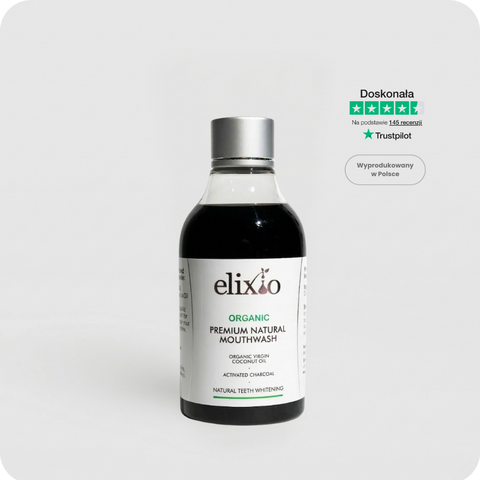
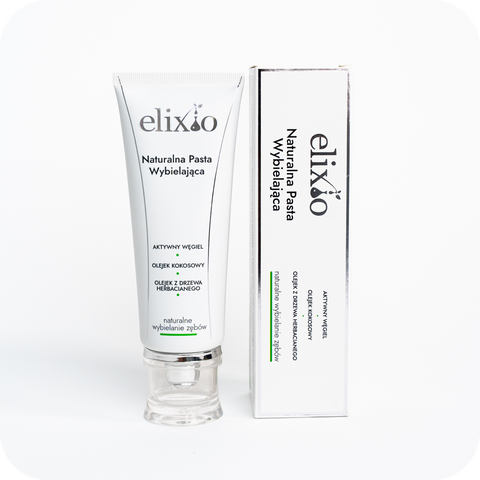
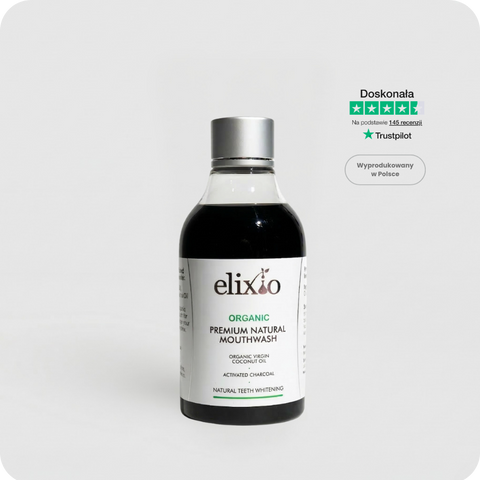
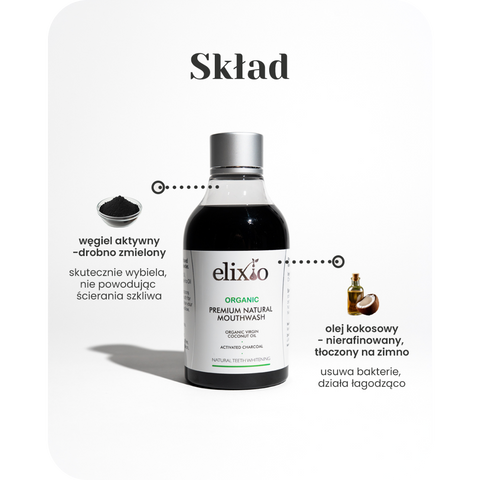
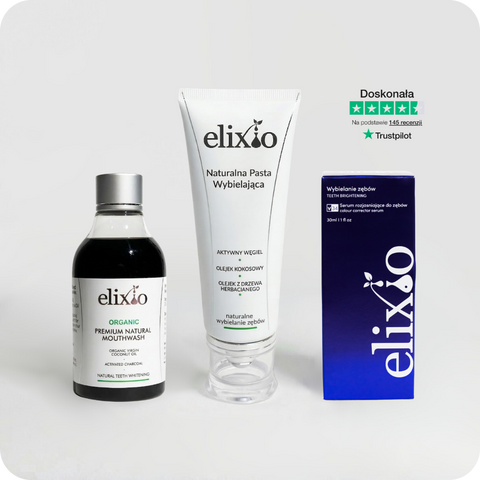
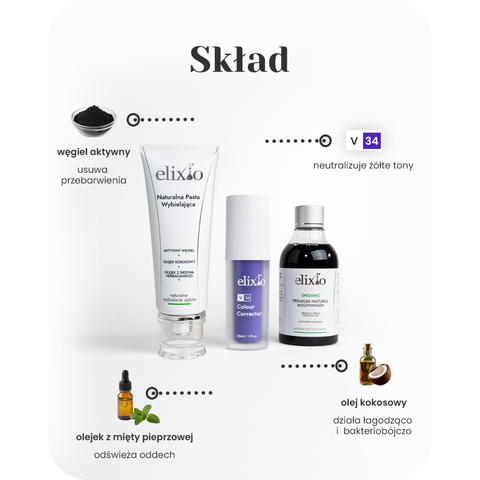
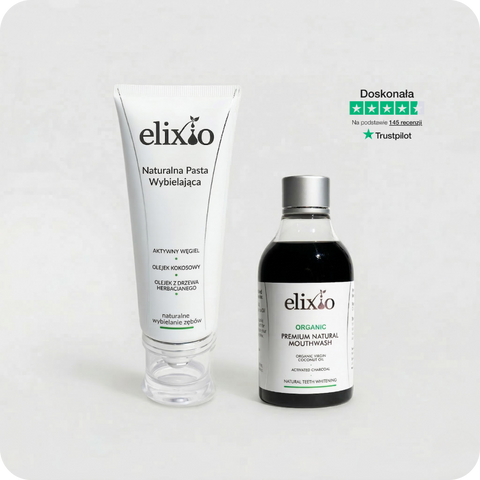
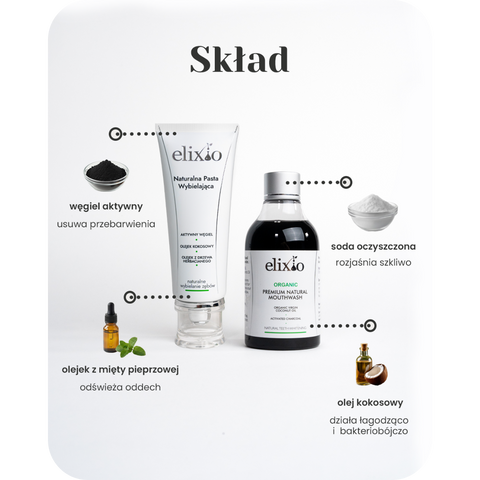
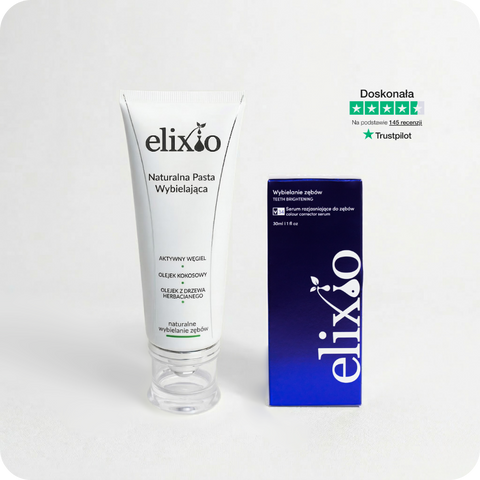
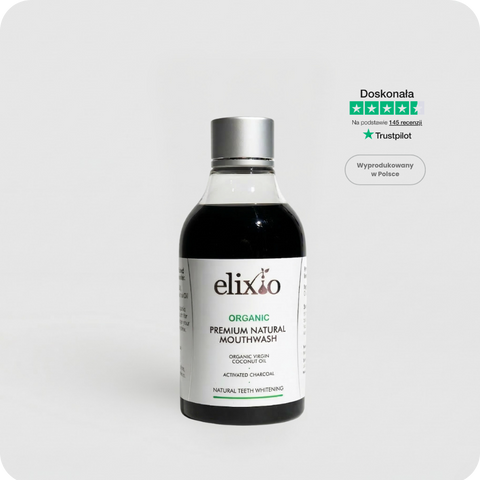
A ready-made product for the routine is Elixio Coconut Oil Pulling Mouthwash.
How long should you rinse?
Start with 2–5 minutes. If comfortable, the time can gradually increase to 10–15 minutes. There is no requirement to reach 20 minutes. Excessively long rinsing can tire the jaw muscles. See “How long should you do oil pulling?”.
Morning or evening?
There is no evidence that either time treats gums more effectively. Mornings make it easier to fit the routine in before breakfast; evenings allow it before brushing. Full oral hygiene afterwards matters most. Read more in “Oil pulling in the morning or evening?”.
Oil pulling with braces
Oil does not replace interdental brushes, orthodontic floss or an oral irrigator recommended by a professional. Braces create areas where plaque can collect more easily, so mechanical cleaning is essential.
Oil pulling with implants and crowns
Plaque control around implants needs particular care. Oil does not treat inflammation of the tissues around an implant. Bleeding, swelling, pain or looseness require prompt assessment. Crowns do not change colour or become “healthier” through oil pulling, although their surfaces may temporarily seem smoother.
When should you avoid oil pulling?
- For young children or people who might swallow the oil.
- With swallowing difficulties.
- Immediately after surgery without a clinician's approval.
- If you are allergic to coconut.
- If it causes coughing, breathlessness or severe nausea.
- If you have acute jaw-muscle or joint pain.
A rare but serious risk is aspiration of fat into the airways. Rinsing must therefore be gentle and carried out only by someone able to control swallowing safely.
Common mistakes
Replacing flossing with oil
Oil does not predictably remove plaque from tight spaces. Floss or interdental brushes are needed.
Swallowing the oil
The product must be spat out after rinsing.
Moving too vigorously
This can cause pain in the muscles and temporomandibular joint.
Postponing an appointment
A home routine should not delay treatment for bleeding, swelling or pain.
FAQ
Does coconut oil treat gingivitis?
It should not be treated as a therapy. It can be an addition to hygiene, but plaque removal and professional assessment are the foundation.
Does oil reduce bleeding?
Some small studies suggest improvements in selected measures, but the effect is uncertain. Persistent bleeding requires a check-up.
Can you rinse every day?
A healthy adult can use it as an optional step according to the instructions, provided it does not cause discomfort.
Does oil remove bacteria from below the gums?
There is no basis for treating it as a therapy for deep periodontal pockets. These require professional cleaning.
Summary
Coconut oil can be a pleasant addition to daily care, but it does not replace brushing, interdental cleaning, fluoride or periodontal treatment. With healthy gums, use it gently and do not swallow it. If you have bleeding, pain or swelling, diagnosis is the priority.
This article is educational and does not replace a dental consultation.