
Oil-pulling instructions often suggest rinsing for fifteen or even twenty minutes. For a beginner, however, that can be uncomfortable. It is better to start with a shorter time, notice how your body responds and extend the routine gradually only if it does not cause jaw pain, nausea or an urge to swallow.
How many minutes should you start with?
For your first attempts, 2–5 minutes is enough. This gives you time to get used to the texture of the oil and learn gentle movements. There is no need to achieve the duration described in traditional practices straight away.
Do you have to rinse for 20 minutes?
No. Longer rinsing should not be a goal in itself. If you feel muscle fatigue, tension or nausea after 5–10 minutes, finish the routine. Comfort and safety matter more than the number of minutes.
How can you increase the time gradually?
- Start with 2–3 minutes for the first few attempts.
- Add about a minute every few days.
- Do not increase the time if your jaw feels tense.
- Use less product if your mouth feels too full.
- Stop earlier if you feel an urge to swallow.
How can you rinse without tiring your jaw?
Keep movements slow and gentle. There is no need to force oil energetically through every gap between your teeth. Simply move it calmly around your mouth, allowing short pauses in movement.
How much oil should you use?
Too much makes rinsing difficult because the oil mixes with saliva and increases in volume. Beginners should use a small amount. The exact amount depends on the product, so check the instructions on the packaging.
What should you do afterwards?
- Spit the oil into a bin or tissue.
- Do not swallow it.
- You can rinse your mouth with water.
- Brush your teeth with your usual toothpaste.
- Clean between your teeth.
Why should you not spit oil into the sink?
Coconut oil can thicken at lower temperatures and build up inside pipes. Regularly pouring it down the drain can contribute to blockages. Spitting it into a bin is the safest way to dispose of it.
Does a longer time produce better results?
Do not assume that longer automatically means better. Oil pulling is an addition to hygiene, not a medical treatment. A long session cannot replace thorough brushing, flossing or professional dental cleaning.
When should you shorten or stop rinsing?
- If your jaw muscles hurt.
- If you feel nauseous or begin to gag.
- If it is difficult to avoid swallowing.
- After a procedure in your mouth, unless a dental professional has approved it.
- If you have significant tooth or gum pain.
Should children practise oil pulling?
The practice requires deliberate control of rinsing and spitting. It is not suitable for young children or people with swallowing difficulties. For an older child, discuss the decision with a dentist.
A product that makes measuring easier
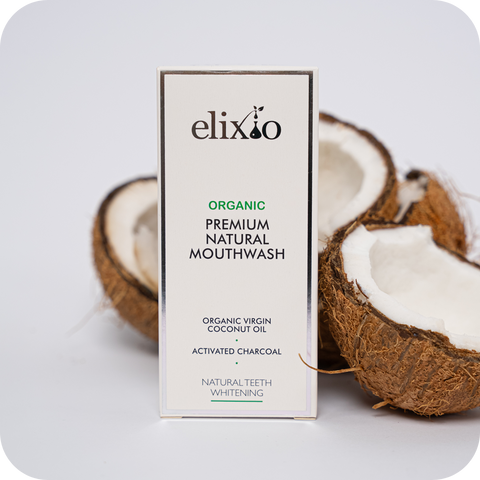
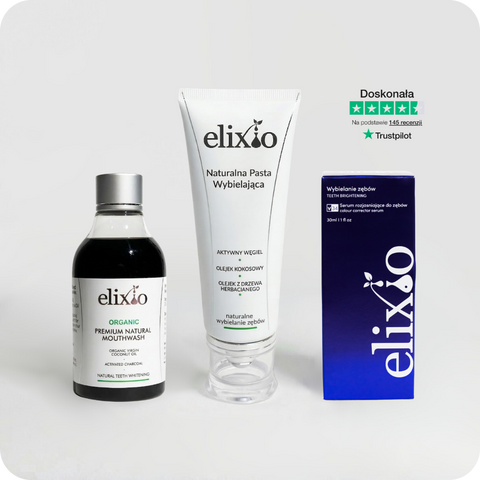
You can choose Elixio Coconut Oil Pulling Mouthwash for your routine. A ready-made product and its instructions can help you avoid using too much.
FAQ
Is a 5-minute oil-pulling routine reasonable?
Yes, especially when starting. A short, comfortable routine is preferable to a long session that causes tension and discouragement.
Can you take breaks while oil pulling?
You can briefly pause jaw movements while keeping the oil in your mouth, provided you feel comfortable.
Why does the amount of oil in your mouth seem to increase?
It mixes with saliva, so the volume can increase. This is another reason to start with a small amount.
Do you need to brush after oil pulling?
Yes. Rinsing does not replace brushing with toothpaste or cleaning between your teeth.
This article is educational and does not replace dental advice.