

Regularly drinking black, green or herbal tea can gradually change the appearance of your smile. This usually does not mean a permanent change in tooth colour, but a gradual build-up of pigments on the enamel surface. Such stains may be particularly visible along the gumline, between teeth and in places a toothbrush does not clean thoroughly.
The good news is that many tea stains are external. You can limit their formation with proper brushing, interdental cleaning and sensible use of toothpaste designed to remove surface stains. Daily care should, however, be distinguished from aggressive scrubbing, which does not speed up results and may irritate the gums.
Why does tea stain teeth?
Tea contains natural colouring compounds, including polyphenols and tannins. They can attach to dental plaque and irregularities in the enamel. The more often the drink contacts the teeth and the longer it remains in the mouth, the more opportunities pigments have to accumulate.
The intensity of staining depends on more than the type of tea. Other factors include:
- how often you drink tea during the day,
- sipping it slowly for several hours,
- the amount of dental plaque,
- smoking,
- dry mouth and reduced saliva,
- crowded teeth and hard-to-reach spaces,
- tartar, on which stains collect more easily.
Can green tea also cause staining?
Yes, although the effect may be less noticeable than after strong black tea. A pale drink does not mean that it contains no compounds capable of forming stains. Total consumption and whether the teeth are cleaned regularly and thoroughly both matter.
How to limit tea stains step by step
1. Drink tea within a defined period
It is better to drink a cup in one sitting than to sip it for half the day. Shorter contact between pigments and enamel reduces the number of opportunities for them to settle.
2. Rinse with water after the drink
A few sips of plain water help remove some drink residue and restore more neutral conditions in the mouth. This is particularly practical when you are away from home and cannot brush immediately.
3. Brush twice a day for about two minutes
Consistency and thoroughness matter more than pressure. Move the brush over every tooth surface, especially the tongue side and gumline. Pressing harder does not remove stains more effectively.
4. Clean between your teeth
Stains often remain where toothbrush bristles cannot reach. Dental floss or interdental brushes help remove plaque to which pigments could attach.
5. Choose toothpaste for the type of stain
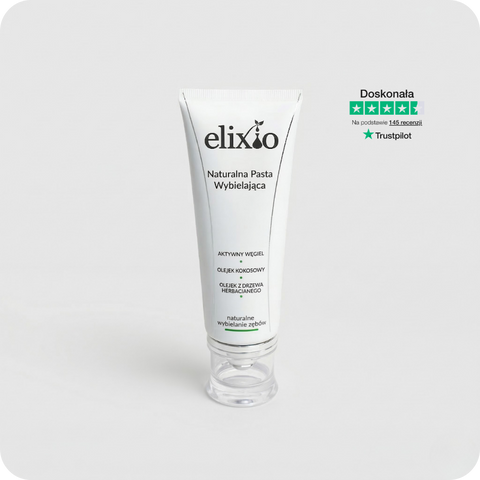
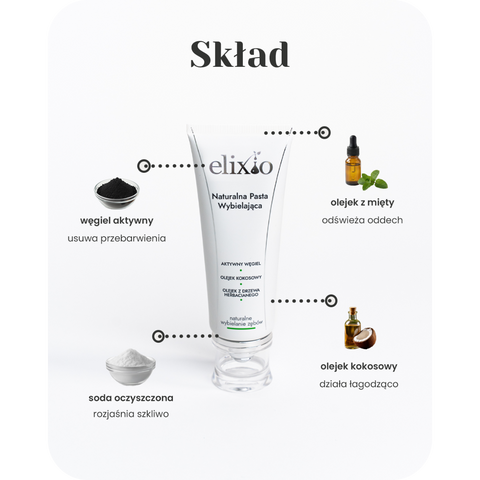
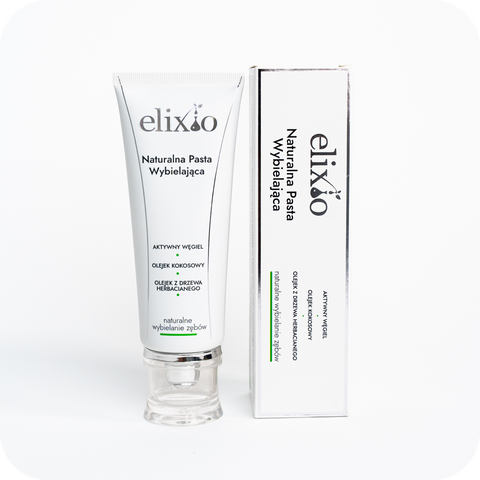
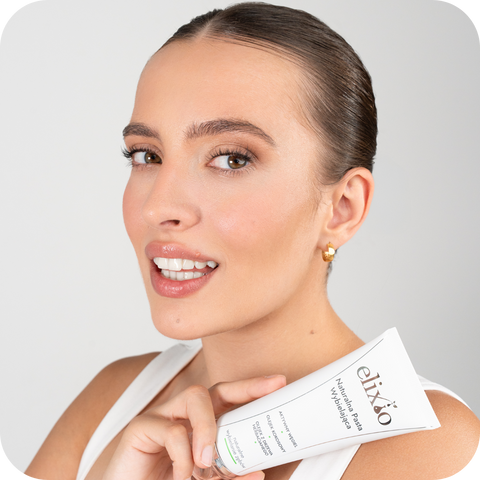
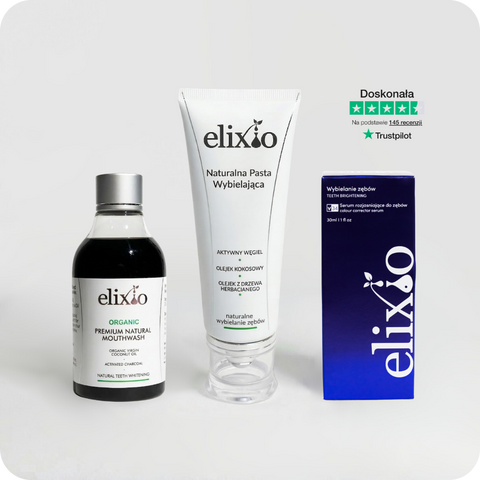
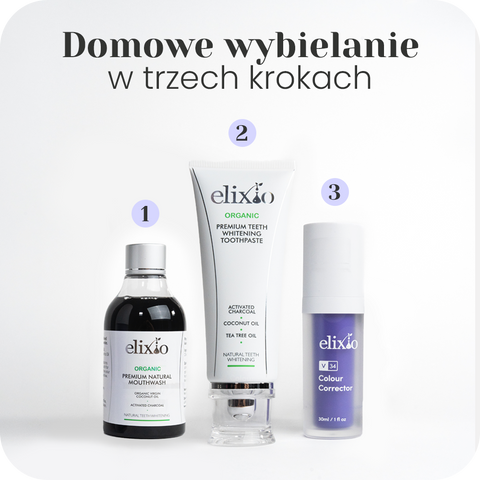
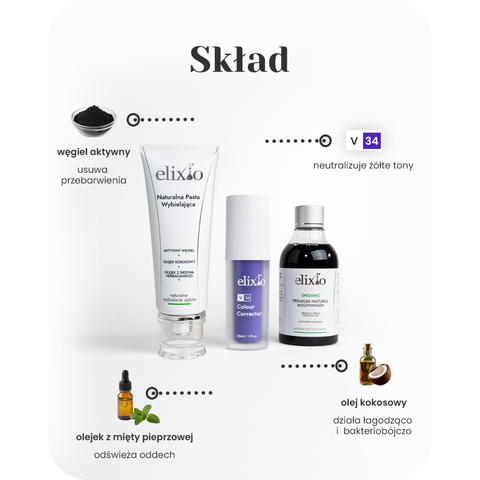
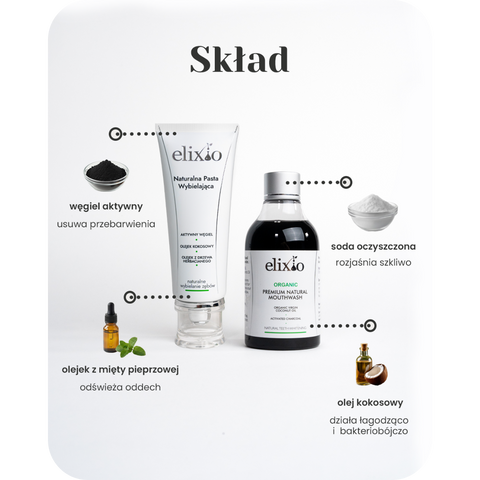
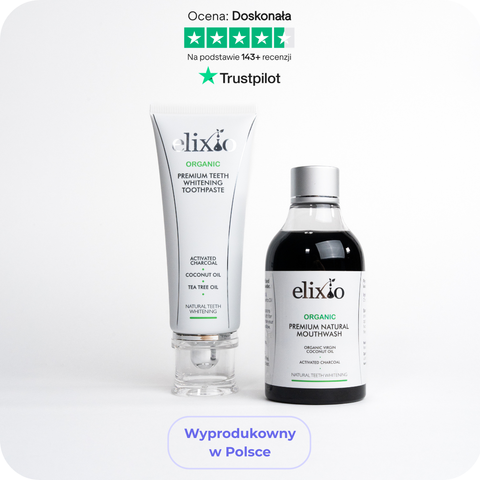
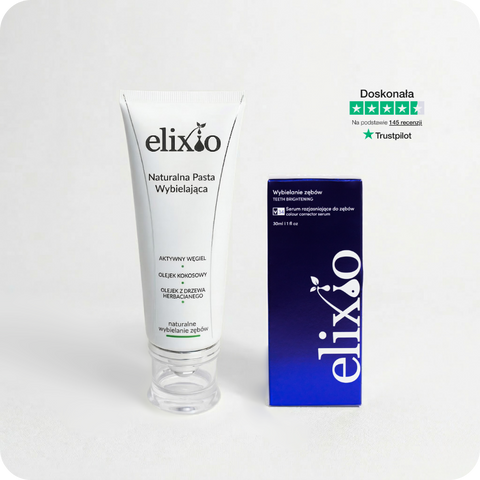
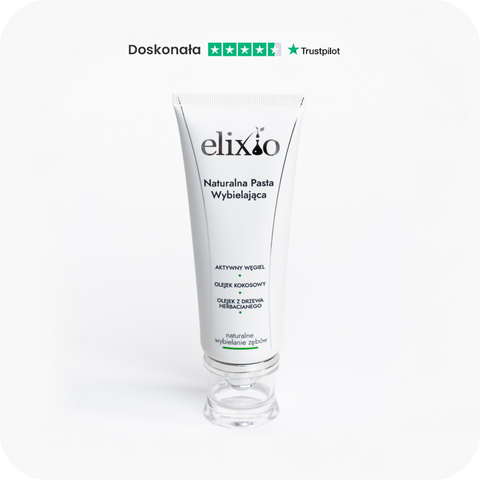
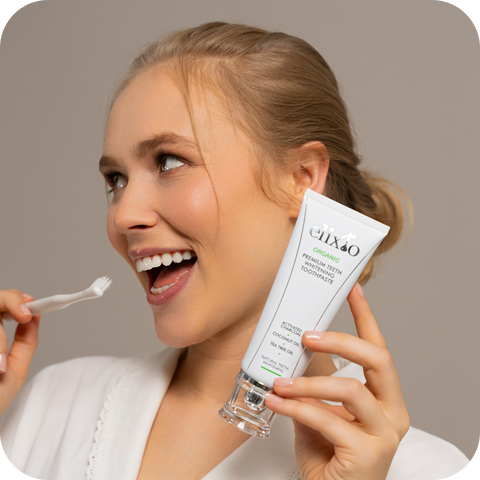
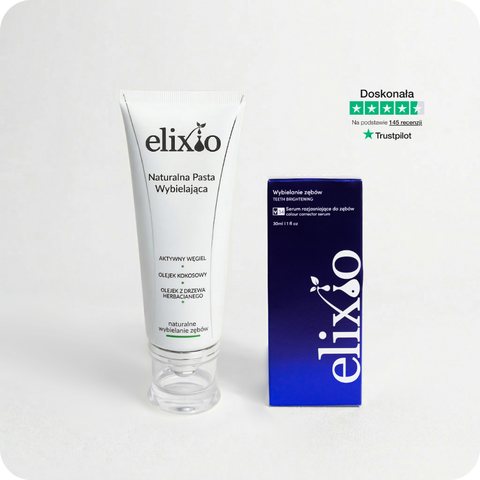
Whitening toothpaste works mainly on surface stains. It does not change the natural colour of dentine or remove discolouration from inside the tooth. You can use Elixio Activated Charcoal Whitening Toothpaste in your daily routine, following the directions and without increasing brushing pressure.
What should you avoid when dealing with tea stains?
- Do not scrub your teeth with baking soda, salt or homemade charcoal powder.
- Do not use a hard toothbrush simply to remove colour faster.
- Do not extend brushing to ten or fifteen minutes.
- Do not try to scrape stains away with metal tools.
- Do not assume that every darker area is a stain. Localised changes require assessment by a dentist.
When is toothpaste not enough?
If stains are firmly established, sit on tartar or do not decrease despite proper hygiene, professional cleaning may be needed. Scaling removes tartar, while air polishing helps clean surface stains in hard-to-reach places.
You should also see a dentist if one tooth suddenly darkens, white or brown spots appear, or you develop pain, sensitivity or bleeding gums. These symptoms should not be treated as a purely cosmetic problem.
A simple routine for tea drinkers
- Brush for two minutes in the morning.
- Drink tea within one defined period instead of sipping continuously.
- Drink water afterwards.
- Clean between your teeth in the evening.
- Brush every tooth surface thoroughly.
- Have your gums and tartar checked regularly by a dentist.
Read more about the mechanism behind staining in our guide to how coffee affects tooth colour. The principles for limiting coffee and tea stains are similar, although their intensity depends on individual habits.
FAQ
Does tea with milk stain teeth less?
Milk may change the colour and composition of the drink, but it does not completely eliminate the risk of staining. Drinking frequency and the quality of daily hygiene still matter.
Do you need to brush after every tea?
No. Thorough morning and evening brushing is most important. Rinsing your mouth with water after tea is a practical option.
How long does it take to see improvement?
Fresh surface stains may gradually decrease after improving hygiene. Established stains or tartar often require professional cleaning.
Will whitening toothpaste lighten naturally yellow teeth?
Toothpaste mainly removes external stains. It does not change the colour of dentine, so the effect depends on how much of the darker shade comes from surface discolouration.
Summary
The best way to limit tea stains is regular gentle brushing, interdental cleaning, drinking water afterwards and controlling tartar. Whitening toothpaste can support the removal of surface discolouration, but it does not replace professional cleaning or diagnosis of changes inside a tooth.