
Does coconut oil whiten teeth? There is no convincing evidence that oil pulling chemically changes the natural colour of enamel. Teeth may look smoother, cleaner or shinier after rinsing, but this is not the same as professional whitening. Coconut oil can be an addition to oral hygiene, but it does not replace brushing, cleaning between the teeth or dental check-ups.
Where did the idea that coconut oil whitens teeth come from?
Oil pulling became popular through before-and-after pictures on social media. The problem is that lighting, camera white balance, lip colour, filters and the angle of a photograph can easily change how teeth look. Warm light emphasises yellow tones; cool light can make the same smile look brighter.
After rinsing with oil, tooth surfaces may temporarily feel smoother and look shinier. This sheen reflects light differently and can be perceived as brightening. It does not mean pigments inside the tooth have been removed.
Whitening, surface-stain removal and optical effects: three different things
In everyday language, “whitening” can refer to several different processes:
- Chemical whitening: changing pigments within the tooth structure using whitening agents.
- Surface-stain removal: cleaning deposits associated with coffee, tea, wine or smoking.
- An optical effect: changing how colour is perceived without permanently changing enamel.
Coconut oil is not a standard chemical whitening agent. Rinsing may provide a subjective feeling of cleanliness, but you should not expect a change of several shades.
What does research say about oil pulling?
Research is limited, often involves small groups and uses different methods. Some studies suggest possible effects on selected bacteria, plaque or measures of gum condition. That does not establish that oil pulling whitens enamel. High-quality research confirming a lasting change in tooth colour is lacking.
A sensible approach is to treat oil pulling as an optional addition, not a replacement for methods with documented benefits.
What might you notice?
- A feeling of smoother tooth surfaces.
- A temporary shine after rinsing.
- A subjective feeling of freshness in the mouth.
- An easier-to-maintain routine for people who enjoy the practice.
- A slight improvement in appearance if soft deposits were previously present, without a predictable whitening effect.
Oil pulling does not remove tartar, lighten a non-vital tooth or change the colour of crowns, veneers or fillings.
How can you take a fair before-and-after photograph?
- Use the same phone for both pictures.
- Stand in the same place, preferably in neutral daylight.
- Turn off filters, automatic beautification and whitening features.
- Keep the camera distance and angle similar.
- Do not compare pictures taken with different lipstick or clothing colours.
- Assess any change over several weeks, not after a single rinse.
If the difference disappears when lighting is matched, it was probably mainly a photographic effect.
How should you use coconut oil?
- Use a small amount of product.
- Move it gently around the mouth without strongly tensing your jaw.
- Start with about 5 minutes and extend the time only if comfortable.
- Do not swallow oil used for rinsing.
- Spit it into a bin, as fat can build up in pipes.
- Afterwards, brush with toothpaste and clean between your teeth.
For full instructions, see the guide “Oil pulling: effects, method and contraindications”.
How long should you rinse with oil?
You do not need to start with the often-mentioned 20 minutes. Beginners usually find 2–5 minutes more comfortable, followed by 10–15 minutes if there is no nausea or jaw pain. Longer does not necessarily mean more effective. See the detailed guide “How long should you do oil pulling?”.
Morning or evening?
There is no strong evidence that one time produces a better effect. Mornings make it easy to fit the routine in before breakfast; evenings allow a calm care step before brushing. What matters most is that rinsing does not lead you to skip basic hygiene. Read more in “Oil pulling in the morning or evening?”.
Coconut oil versus whitening toothpaste
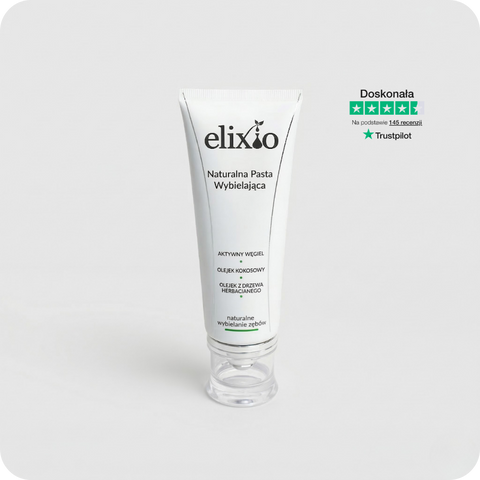
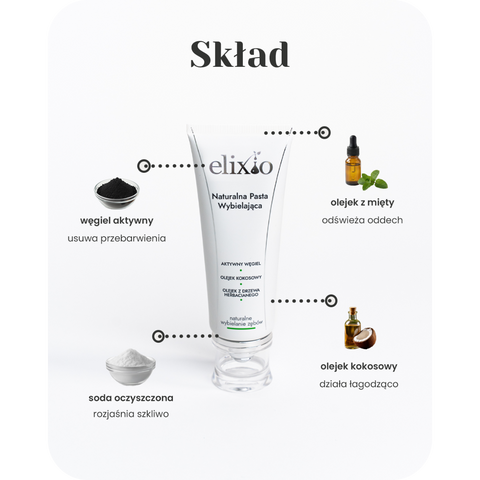
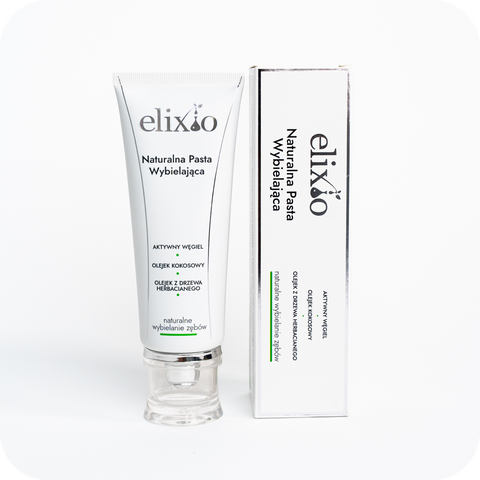
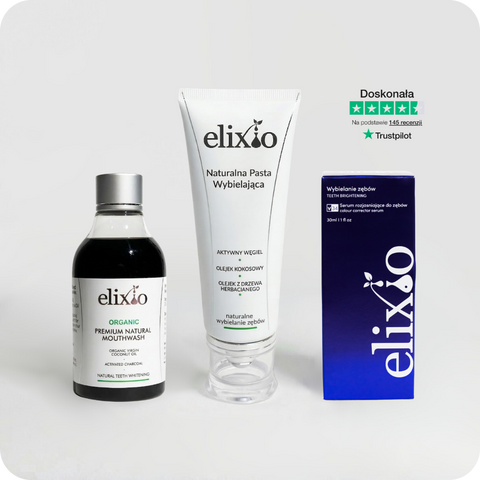
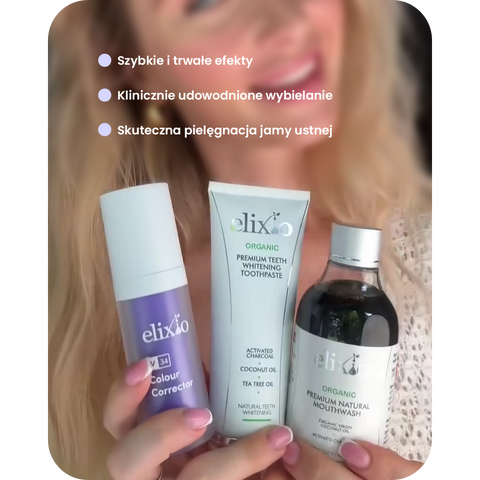
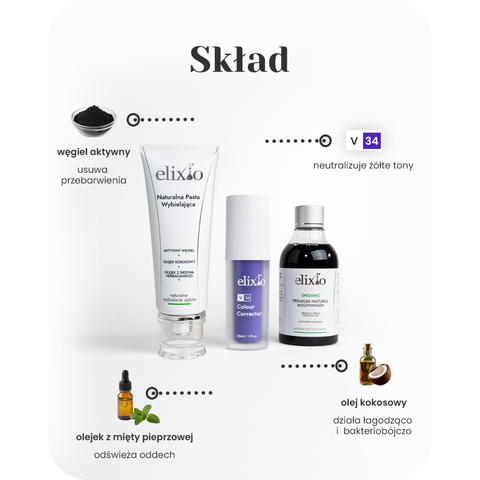
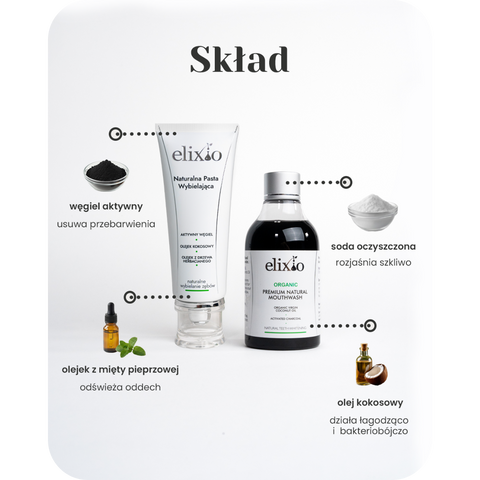
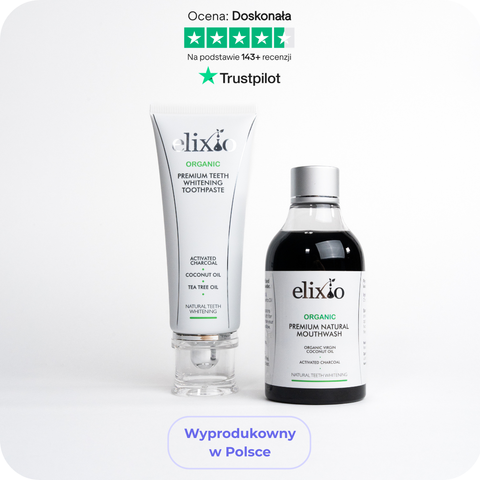
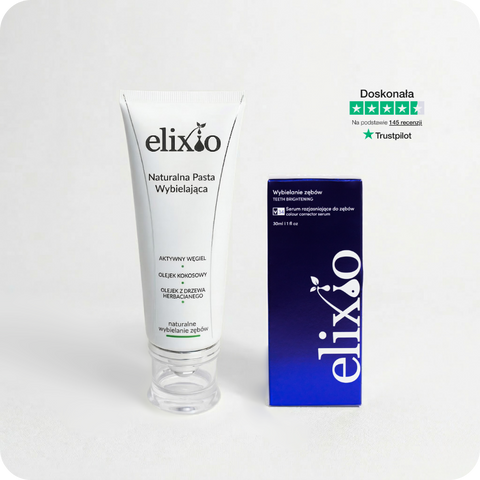
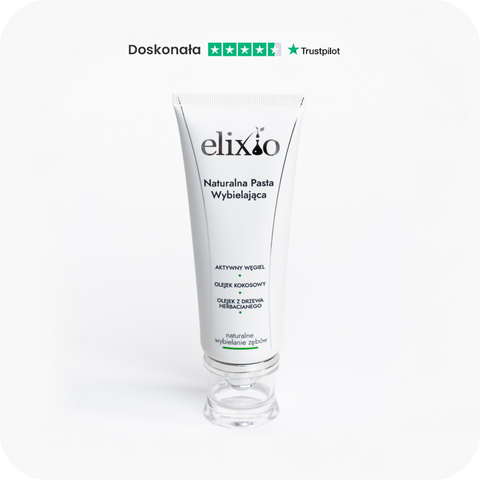
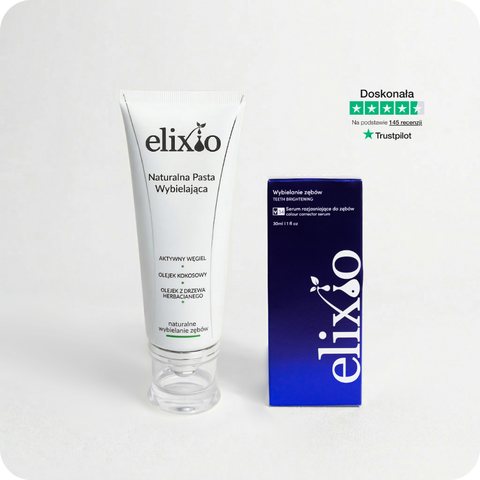
Whitening toothpaste is intended for mechanical tooth cleaning and may help remove external deposits. Coconut oil does not perform the same function or provide the anti-cavity ingredients found in many toothpastes. If your concern is coffee or tea staining, appropriate toothpaste, such as Elixio Activated Charcoal Whitening Toothpaste, may be a more relevant product to consider, following its instructions.
For an explanation of the mechanisms, see the guide “How whitening toothpaste works”.
Coconut oil versus V34
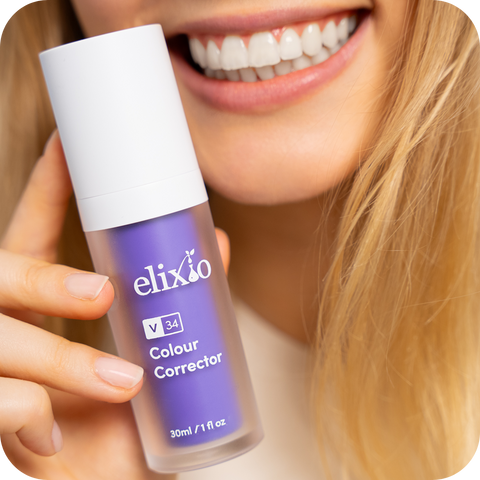
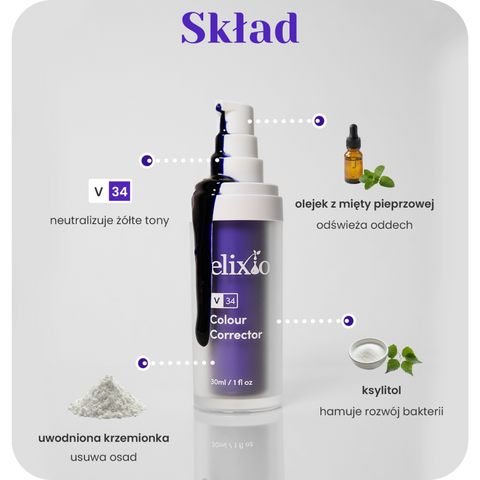
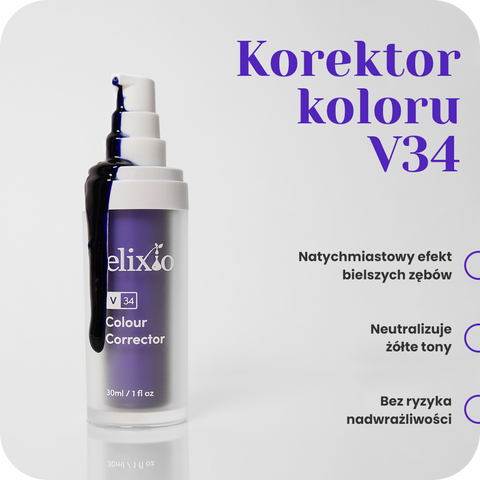
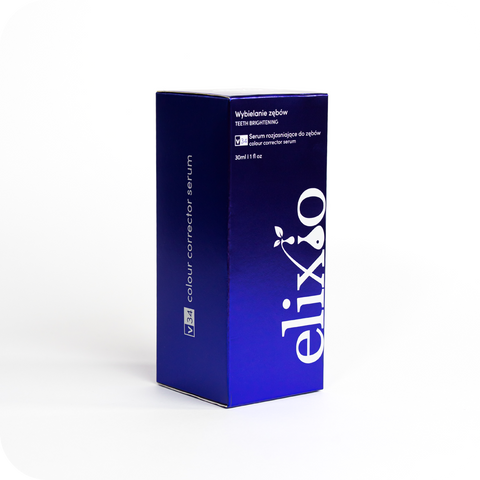
V34 colour corrector uses purple pigment for temporary optical correction of yellow tones. Coconut oil does not use this mechanism. If the aim is a short-term cosmetic effect before a photograph or special occasion, Elixio V34 colour corrector is a product intended for that purpose, rather than an oil-pulling treatment.
When will oil not solve the problem?
- Tartar.
- A single tooth becoming darker.
- Discolouration associated with medication or injury.
- Tooth decay and cavities.
- Pain, swelling or a pus-producing infection.
- Uneven colour of crowns, veneers or fillings.
These situations require a dental diagnosis, professional cleaning or an individually selected approach to improving colour.
Common myths
“Oil draws stains out of enamel”
There is no reliable evidence that oil removes pigments from the internal structure of a tooth.
“The longer I rinse, the whiter my teeth will be”
This relationship has not been demonstrated. Excessively long sessions may simply cause jaw fatigue or nausea.
“Oil pulling replaces toothpaste”
No. It does not replace brushing, fluoride or cleaning between the teeth.
“Oil removes tartar”
No. Mineralised tartar is removed by a dentist or dental hygienist.
Safety and contraindications
Oil pulling is not suitable for young children, people with swallowing difficulties or anyone unable to spit the product out safely. Stop if it causes coughing, breathlessness, severe nausea, jaw pain or irritation. After oral surgery, follow only your clinician's instructions.
Avoid coconut products if you are allergic to coconut. Oil pulling must not delay treatment for pain, swelling or bleeding gums.
FAQ
Will coconut oil whiten teeth after one use?
It may give a temporary feeling of smoothness or shine, but there is no basis for expecting a lasting colour change after one rinse.
Does the oil remove coffee stains?
There is no dependable evidence of predictable stain removal. Correct brushing, suitable toothpaste and professional cleaning are more appropriate for this purpose.
Can you practise oil pulling daily?
A healthy adult who tolerates it well can treat it as an optional routine step according to the product instructions. It is not an essential part of oral hygiene.
Will oil whiten crowns or veneers?
No. It does not change the colour of restorative materials.
Summary
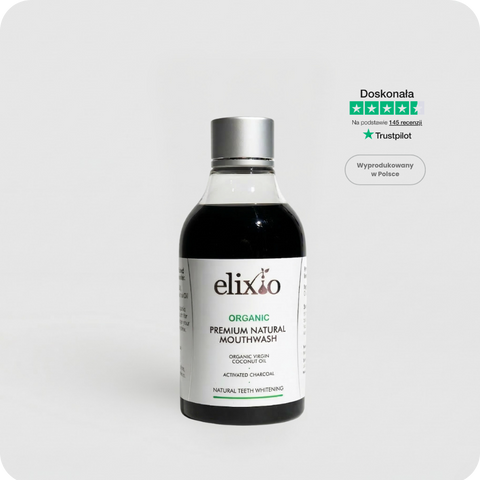
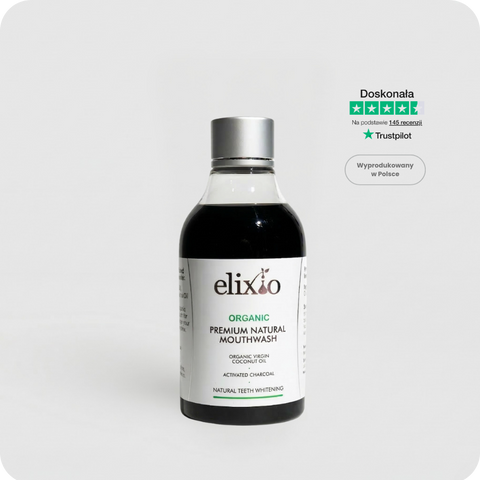
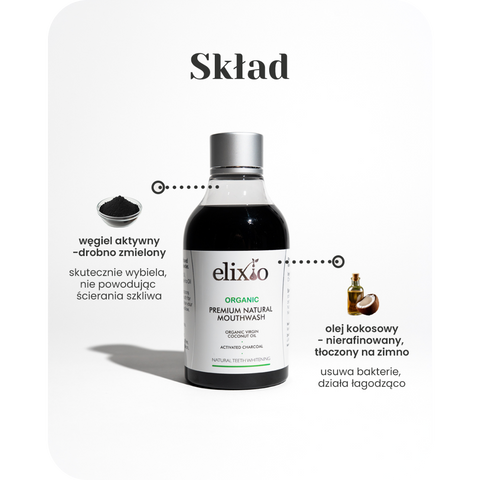
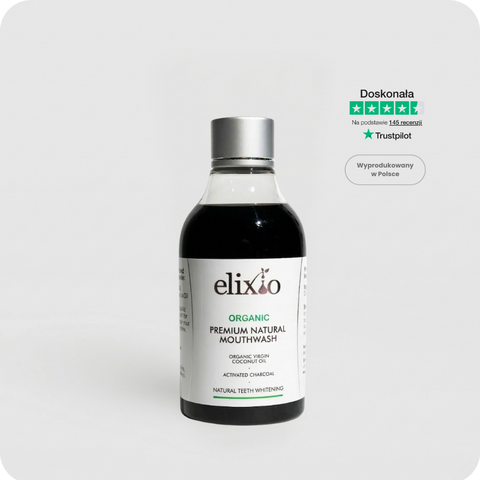
Coconut oil is not a proven whitening agent. It may improve the subjective feeling of cleanliness and temporarily affect tooth shine, but it does not replace toothpaste, professional cleaning or professional whitening. For a convenient oil-pulling routine, you can choose Elixio Coconut Oil Pulling Mouthwash.
This article is educational and does not replace a dental consultation.