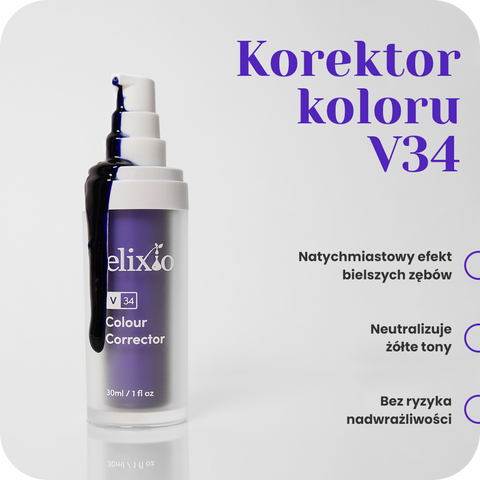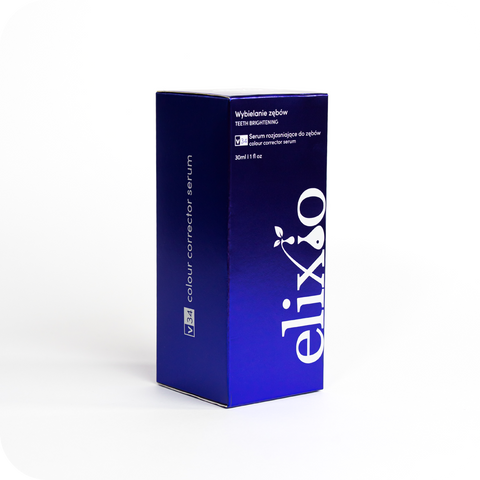


The V34 colour corrector does not produce the same result on every tooth shade. This follows from how it works: violet pigment is best at neutralising yellow tones. If discolouration is grey, brown, localised or very uneven, the visible change may be limited. Lighting, the natural structure of the tooth and the presence of crowns, veneers or fillings also matter.
Why does the natural shade of teeth vary?
The colour of a smile depends on more than the surface of the enamel. Enamel is partly translucent, and the dentine beneath it has a naturally warmer shade. Appearance is influenced by factors including:
- enamel thickness and translucency,
- the natural colour of dentine,
- age,
- deposits from food and drinks,
- previous injuries or dental treatment,
- dental materials,
- lighting and the camera's white balance.
Healthy teeth are therefore not always snow-white, and a slightly creamy shade can be entirely natural.
On which shade may V34 be most visible?
The most noticeable optical effect may appear on light or moderate yellowish tones. Violet sits opposite yellow on the colour wheel, so it can make a smile look cooler.
This does not mean that every yellowish shade will respond in the same way. If the colour comes mainly from the deeper, natural shade of dentine, the effect may be subtler than on a warm surface tone.
What about grey teeth?
Grey is not the direct opposite of violet, so the corrector may work less visibly. A grey shade in one tooth, especially if it appeared after an injury or developed suddenly, should be assessed by a dentist. This is not something that should be masked with a cosmetic product alone.
What about brown discolouration?
Brown deposits from coffee, tea, tobacco or other factors may first require thorough cleaning. V34 does not remove deposits. For surface staining, correct brushing or professional hygiene treatment may be more important.
If a brown mark is localised, remains despite brushing or sits in a groove in the tooth, tooth decay should be ruled out.
Does V34 work on very white teeth?
If teeth already have a cool, light shade, the difference may be minimal. Making the colour excessively cool does not always look natural. The corrector should not be used to pursue an unnaturally blue or violet effect.
Crowns, veneers and fillings
Dental materials have a fixed colour and do not change because of a colour corrector. Violet pigment may briefly affect how the surface is perceived, but it does not lighten the material. If natural teeth and crowns have different shades, the result may be uneven.
When planning professional whitening, remember that older fillings or crowns may later need their colour adjusted by a dentist.
Why does lighting change the effect?
Light strongly affects colour perception. Warm bulbs emphasise yellow, cool lighting reduces it, and a phone may adjust white balance automatically. It is therefore best to assess the effect:
- by a window in daylight,
- without photo filters,
- in photos taken with the same device,
- before and after under identical conditions.
How can you estimate your shade type at home?
At home, colour can only be assessed approximately. Stand by a window and look at your teeth beside a white sheet of paper. Notice whether the dominant tones are:
- yellowish or creamy — V34 may give a more visible optical effect,
- grey — the effect may be limited,
- brown or patchy — the cause of the discolouration should be identified first,
- uneven between teeth — differences may result from tooth structure or dental materials.
A home assessment does not replace a dental examination or professional shade matching.
What affects application performance?
- a clean tooth surface,
- even application of a small amount of product,
- following the time stated in the instructions,
- rinsing the mouth thoroughly,
- no fresh, heavy surface deposits,
- assessment in neutral light.
When should you not try to mask the colour?
Consult a dentist if:
- one tooth suddenly becomes darker,
- the discolouration is accompanied by pain,
- you see a localised brown or black mark,
- your gums bleed, swell or hurt,
- you have severe sensitivity,
- the colour changed after an injury.
How can you improve the chance of a natural-looking result?
- Start with thorough oral hygiene.
- Try the product on an ordinary day, not immediately before an event.
- Use a small amount in line with the instructions.
- Do not combine V34 with aggressive at-home whitening methods.
- Assess your smile in daylight.
- Accept that the effect may be subtle.
FAQ
Does V34 work on naturally creamy teeth?
It may make their shade look cooler, but the effect depends on the proportion of yellow tones and enamel translucency.
Does the corrector work on coffee stains?
It may temporarily change how they look, but it does not remove deposits. Deposits require cleaning.
Will V34 even out one darker tooth?
You should not rely on it for this. A single darker tooth should be assessed by a dentist.
Can the effect look different in the mirror and in a photo?
Yes. The camera, lighting and automatic colour correction can significantly change how a smile appears.
Will the product lighten veneers?
No. It will not change their actual colour.
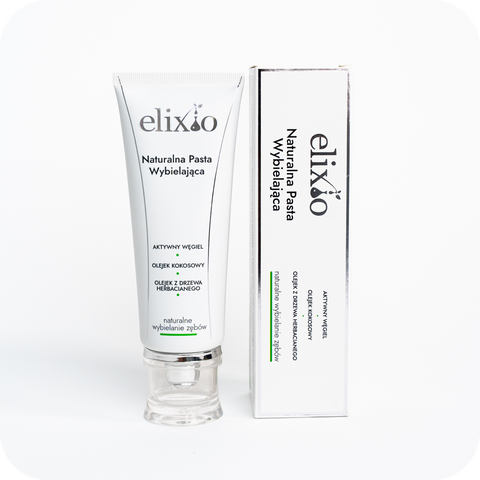
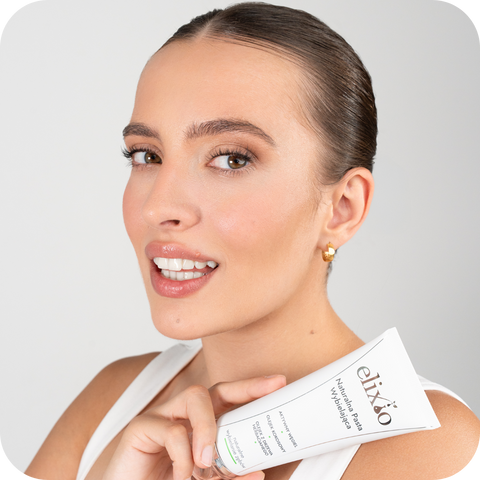
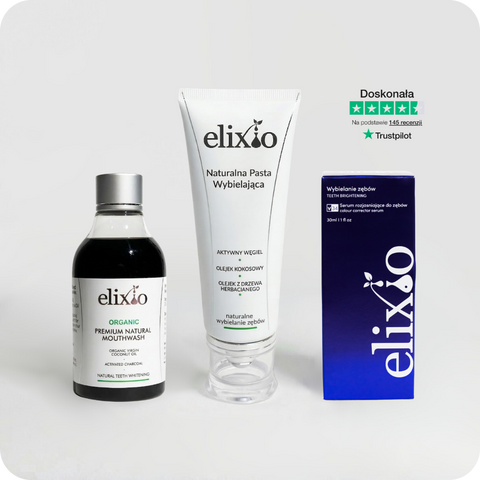
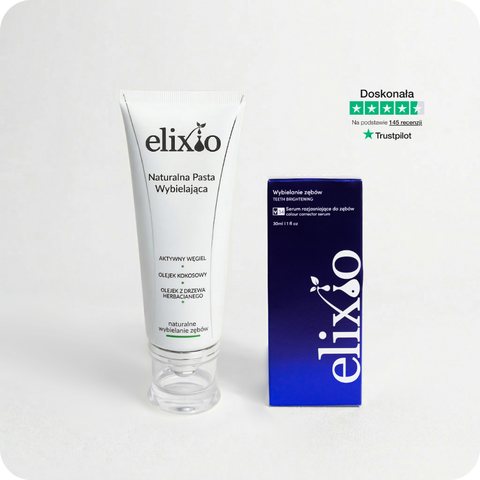
Explore the Elixio V34 colour corrector and see how its optical effect looks on your natural tooth shade.
This article is for information only. Sudden, localised or painful colour changes require a dental consultation.